After 70 Years, Endangered Musk Deer Reappears in West Bengal — A Himalayan Comeback in Neora Valley
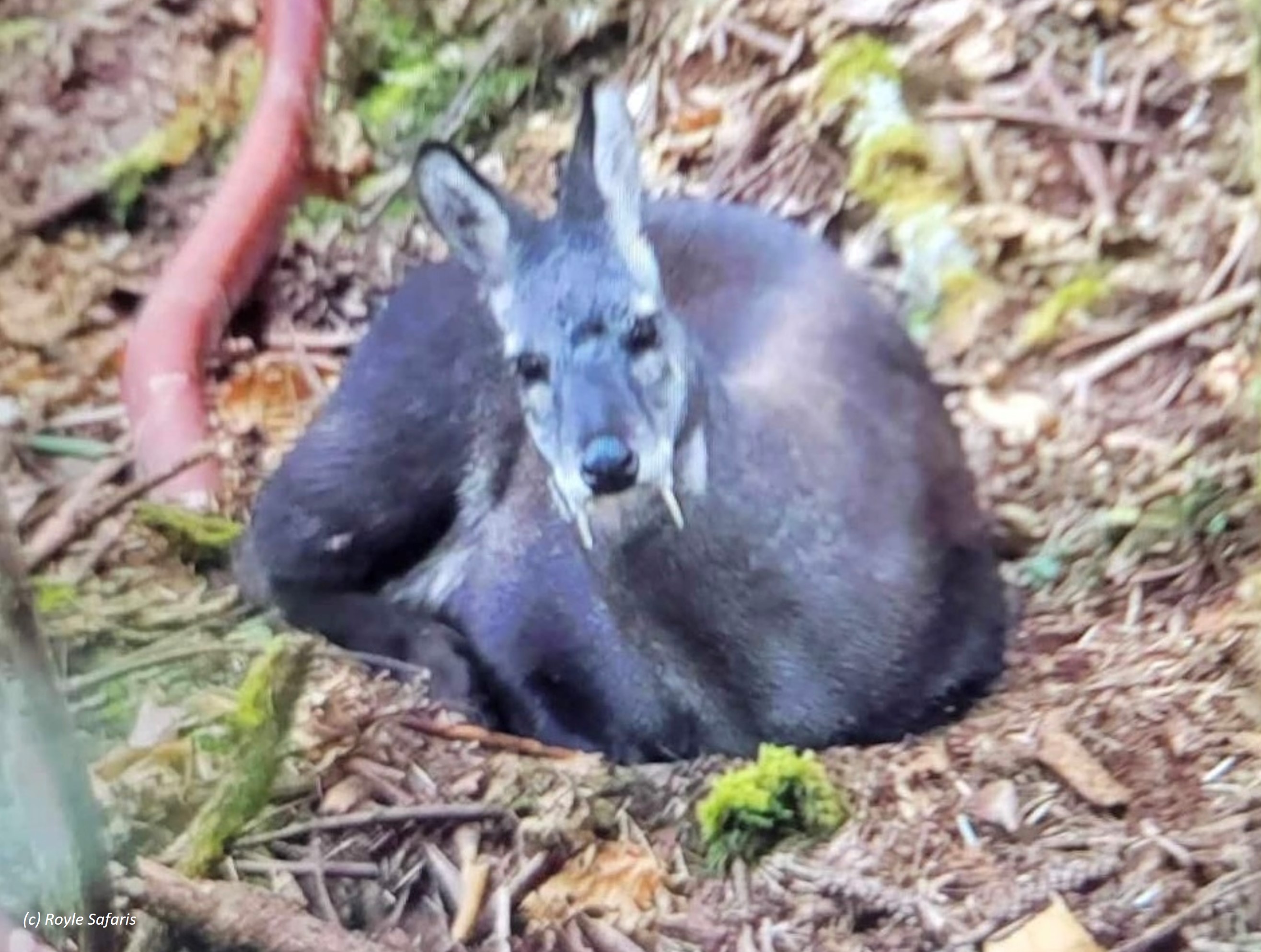
In a remote corner of India’s eastern Himalayas, a surprise discovery has stirred hope: a member of the endangered musk deer genus has been photographed in Neora Valley National Park (West Bengal) — a sighting that confirms the species’ survival in the region after 70 years of silence. The images, taken by a camera trap on December 17, 2024 at about 3,112 meters above sea level, show the distinctive features of musk deer — elongated, hare-like ears, absence of antlers, and visible upper canines. These traits identify it as belonging to the genus Musk deer (Moschus). This discovery comes as part of a wider survey, originally focused on the threatened Red panda, carried out under a Pan-India Assessment and Monitoring of Endangered Species program. The survey—which began in December 2023—used an array of camera traps across Neora Valley. One of those cameras captured six consecutive frames of the deer. Historically, the last confirmed sighting of a musk deer in Bengal dates back to 1955, in Singalila National Park, meaning that for nearly seven decades the region was believed to be devoid of this deer. All four musk-deer species native to India (the Himalayan musk deer, Black musk deer, Alpine musk deer, and Kashmir musk deer) are listed as Endangered (EN). Their populations have been decimated by poaching, especially for their highly valued musk glands, and habitat loss due to forest destruction and human expansion. Because of the poor visibility in night-time camera-trap images, researchers refrained from assigning a definitive species name; they acknowledged only that the animal belongs to the genus Moschus. Still, the find is very important: it proves that musk deer have maintained a foothold in the Neora Valley ecosystem. Why does this matter? Neora Valley spans roughly 160 km² within the larger transboundary Kangchenjunga landscape and offers a mix of temperate forest, alpine slopes, and remote terrain, ideal for elusive high-altitude mammals like musk deer. The rediscovery brings two major implications: first, it offers hope that populations may still persist in remote Himalayan refuges even where they are thought lost. Second, it underscores the urgent need for renewed conservation attention. As one forest official commented, the park’s rugged terrain and low human interference could have allowed the deer to survive undetected, but formal protection and long-term monitoring are now critical if the population is to recover. Conservation scientists are calling for a systematic follow-up: more camera-trap coverage across different zones of the park, genetic analysis of scat to estimate population size, and habitat protection measures if a viable population is confirmed. These steps are vital because musk deer are especially vulnerable: they reproduce slowly, occur naturally at low densities (often solitary), and their musk glands make them targets for poaching. The sighting shows that even species thought locally extinct may be quietly surviving in the right habitat. It urges us to look harder, protect better, and act sooner. If you care about endangered wildlife, sharing news like this matters. It builds awareness, stirs public support, and may help secure funding or attention for critical conservation measures. Nature has a way of hiding its jewels, sometimes for decades. But every now and then, with a gentle click of a camera trap, the forest whispers that it's still alive.
Photos and Videos

Explore More
To read more about this species and 14,000 other species around the world come to our website, register and explore more courageous stories like this one.
Pick an Animal and Save It