Ancient Cheetah Mummies in Saudi Arabia Could Help Bring the Species Back to the Arabian Desert
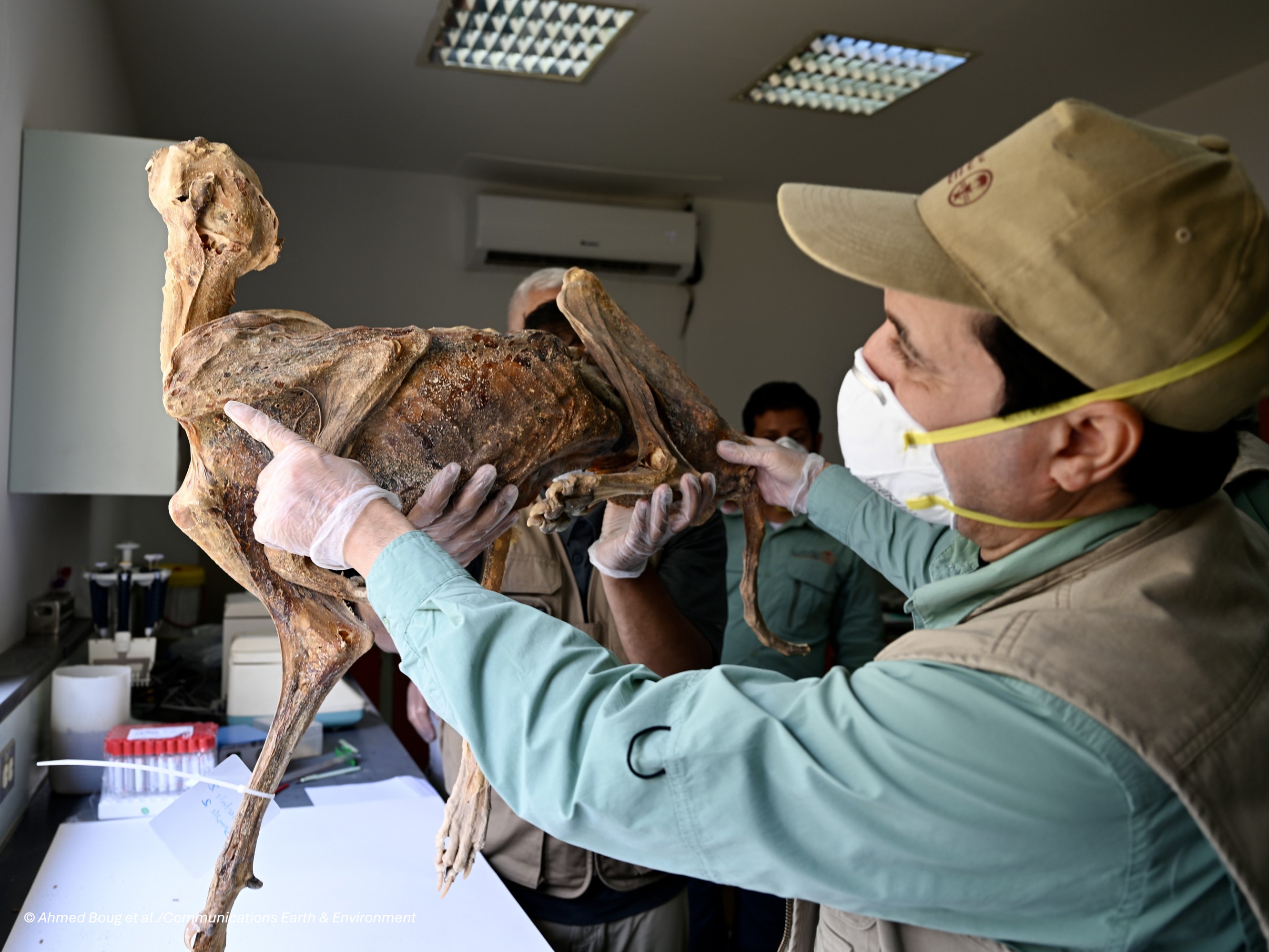
Deep beneath the deserts of northern Saudi Arabia, a remarkable scientific discovery is reshaping what researchers know about the history and possible future of one of the world’s fastest and most threatened predators. Hidden inside remote limestone caves, scientists have uncovered seven naturally mummified cheetahs along with the skeletal remains of 54 more, some dating back thousands of years. The find is not only one of the most unusual archaeological discoveries in recent wildlife research, but it could also help guide plans to reintroduce cheetahs to the Arabian Peninsula. The discovery was made during biodiversity surveys of the Lauga cave network near the city of Arar, where researchers from Saudi Arabia’s National Center for Wildlife were exploring underground systems in search of bats and other cave species. Instead, they encountered something unexpected: remarkably preserved big cats with leathery skin, visible teeth, and even intact facial features. The dry, cool conditions inside the caves had naturally mummified the animals, preventing decomposition and preserving soft tissue for centuries. Radiocarbon dating revealed that the cheetah remains span an enormous time range. Some individuals died as recently as about 130 years ago, while others date back more than 4,000 years, providing a rare window into how cheetah populations once lived across the Arabian Peninsula. For scientists, the discovery is significant for another reason: DNA. Using preserved tissue from several mummified specimens, researchers were able to extract and analyze genetic material, something that had never been done before with naturally mummified big cats. The results, published in the journal Communications Earth & Environment, revealed surprising details about the cheetahs that once roamed Arabia. Many researchers previously believed that the region had been inhabited primarily by the Asiatic cheetah, a subspecies now critically endangered and restricted to a tiny population in Iran. But the genetic analysis told a more complex story. The oldest Arabian cheetahs were actually closely related to the Northwest African cheetah, while only the youngest specimen showed stronger links to the Asiatic lineage. This revelation could prove crucial for conservation planning. Today, the global cheetah population is estimated at around 6,500 individuals, and the species is classified as Vulnerable due to habitat loss, human conflict, and declining prey populations. On the Arabian Peninsula, cheetahs disappeared entirely in the 20th century. Without living populations, scientists have struggled to determine which subspecies would be best suited for reintroduction. The new genetic findings may finally provide that answer. Because the ancient Arabian cheetahs appear genetically closer to the Northwest African subspecies (Acinonyx jubatus hecki), conservationists now have evidence that animals from that lineage might be suitable candidates for future rewilding efforts. Researchers also believe the caves themselves may have served as long-term cheetah dens. The discovery of remains from animals of different ages (including possible cubs) suggests that generations of cheetahs may have used the underground shelters to escape extreme desert heat or raise their young. Beyond the mystery of how the cheetahs ended up in the caves, the discovery paints a vivid picture of a lost ecosystem. Thousands of years ago, the Arabian Peninsula supported a richer web of wildlife than it does today, with predators like cheetahs hunting antelope and other desert herbivores. Now, conservationists hope the region could one day host these animals again. Saudi Arabia has already begun restoring wildlife populations by reintroducing several prey species, such as gazelles and oryx, to protected reserves. Establishing healthy populations of these animals is considered a crucial first step before any large carnivores can return. For scientists involved in the project, the mummified cheetahs represent more than an archaeological curiosity. They are a bridge between the past and the future of wildlife conservation in the Middle East. Ancient DNA is increasingly becoming a powerful tool in conservation biology, helping researchers understand historical ecosystems and identify which species (or subspecies) belong in particular environments. In this case, centuries-old remains may provide the genetic blueprint needed to restore a lost predator to its former habitat. If reintroduction efforts eventually succeed, the deserts of Arabia could once again echo with the presence of the cheetah, a reminder that even discoveries buried deep underground can help shape the future of endangered species conservation. This story was made possible by a Salvex repurposing strategy. A BYD MC10C-B5365-U-R4M01 DC Battery Energy Storage System (BESS) was involved in an insurance claim, declared surplus by a Malaysian global claims consultancy, and repurposed in Aseer, Saudi Arabia. This also created a carbon offset of 582.1 tCO₂e. https://www.salvex.com/listings/listing_detail.cfm/aucid/183053819
Photos and Videos
Explore More
To read more about this species and 14,000 other species around the world come to our website, register and explore more courageous stories like this one.
Pick an Animal and Save It