From Struggle to Sea: How Cyprus’ Endangered Monk Seal Pup ‘Panagis’ Was Rehabilitated and Returned to the Wild
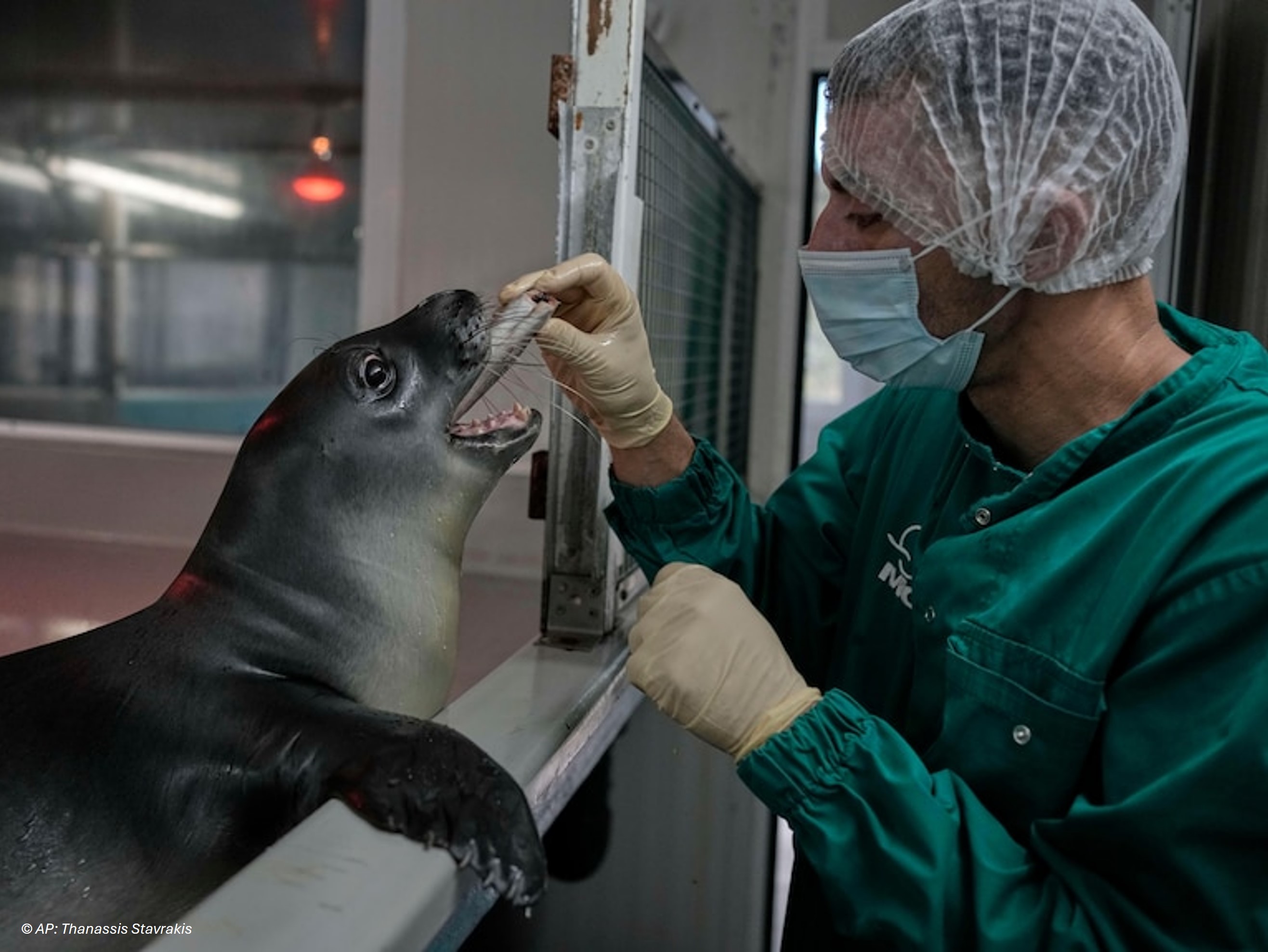
An orphaned Mediterranean monk seal (Monachus monachus) pup found alone off the coast of Cyprus has become a symbol of dedicated international cooperation to save one of the world’s rarest marine mammals. After months of medical care and rehabilitation in a specialized facility, the young seal, affectionately named Panagis, was returned to Cypriot waters to begin the next chapter of its life in the wild. The Mediterranean monk seal is classified as Vulnerable, although the Mediterranean subpopulation is considered to be Critically Endangered. With an estimated global population of only around 800 individuals, it remains one of the rarest marine mammals on the planet and the only seal species native to the Mediterranean and adjacent seas. The story of Panagis began in November 2024 when authorities discovered the pup alone on a rocky shore near Famagusta after his mother had died during childbirth. Lifeguards and conservation officials with the Cyprus Department of Fisheries and Marine Research mobilized quickly to rescue the tiny seal, just days old and at high risk of mortality without maternal care. Recognizing that the pup would not survive without specialized treatment, Cypriot authorities arranged for Panagis to be airlifted to Greece under the care of MOm (Hellenic Society for the Study and Protection of the Mediterranean Monk Seal), the region’s premier conservation organization dedicated to rescuing and rehabilitating monk seals. The transport, provided free of charge by a Greek airline, demonstrated a cross-border commitment to protecting this endangered species. At MOm’s rehabilitation center at the Attica Zoological Park near Athens, veterinary teams and marine biologists provided continuous care, feeding, and medical treatment over a five-month period. When he arrived, Panagis weighed just 15 kilograms and was vulnerable to illness, dehydration, and malnutrition. Through specialized feeding, including whole fish such as mackerel, physical therapy and gradual conditioning, he gained strength and weight, reaching about 61 kilograms and demonstrating the hunting instincts needed for survival in the wild. Panagis’ recovery is not just a heartening individual success; it reflects decades of conservation work across the Mediterranean that have slowly improved the outlook for the species. While the Mediterranean monk seal was once listed as Critically Endangered due to decades of persecution, habitat loss, and disturbance throughout the 20th century, concerted efforts by MOm and international partners have contributed to population growth, expanded monitoring networks, and greater public awareness of threats to this marine mammal. Nearly half of the global Mediterranean monk seal population now resides in Greek waters, where extensive coastlines and sea caves offer shelter and pupping sites, and where community outreach has helped reduce human-seal conflicts. Rescued seals like Panagis are typically tagged before release to enable researchers to track their movements and survival, contributing valuable data for long-term management plans. The return of Panagis to Cyprus in March 2025 was a moment of celebration for conservationists, government officials, and local residents alike. “Today we welcome Panagis back after a five-month absence in Greece,” said Haris Nicolaou, a representative of Cyprus’s Ministry of Agriculture, Rural Development and Environment, at the time of the seal’s arrival at Larnaca Airport. Nicolaou emphasized that the seal was ready to be released into its natural habitat, where it belongs. Efforts to protect Mediterranean monk seals in Cypriot waters extend beyond individual rescues. Ongoing monitoring programs have documented that births now occur more frequently than in the past, and conservation rules, such as restricting fishing and boating near critical sea-cave habitats, help reduce disturbances during pupping and nursing seasons. However, with an estimated 20–22 seals in Cypriot waters alone, the local population remains fragile and vulnerable to threats such as bycatch, pollution, and habitat encroachment. The story of Panagis highlights both the vulnerabilities of endangered wildlife and the power of coordinated conservation action. From a lonely pup struggling on a rocky shore to a robust young seal poised to take to the water again, Panagis embodies hope, showing that species labelled at risk can still be given a fighting chance when science, policy and compassion align. Panagis’ journey also serves as a reminder: individual animals can inspire broader public support, and concerted efforts — from rescue to rehabilitation to release — can make a tangible difference in the survival of imperiled wildlife. Share this story to raise awareness for the Mediterranean monk seal and the ecosystems it represents, and to support the vital work of conservationists across the Mediterranean. This story was made possible by a Salvex repurposing strategy. A lot of 2128.24 Metric Tons of 2 3/8" - 36" unused tubing, casing, and line pipes was available as unused surplus for structural applications by an Italian O&G operator company and repurposed in Nicosia, Cyprus. This also created a carbon offset of 3085 tCO2e. https://www.salvex.com/listings/listing_detail.cfm/aucid/183046678/
Photos and Videos
Explore More
To read more about this species and 14,000 other species around the world come to our website, register and explore more courageous stories like this one.
Pick an Animal and Save It