Kenyan Ranger Honoured — Meet the Man Fighting to Save the Last Mountain Bongo
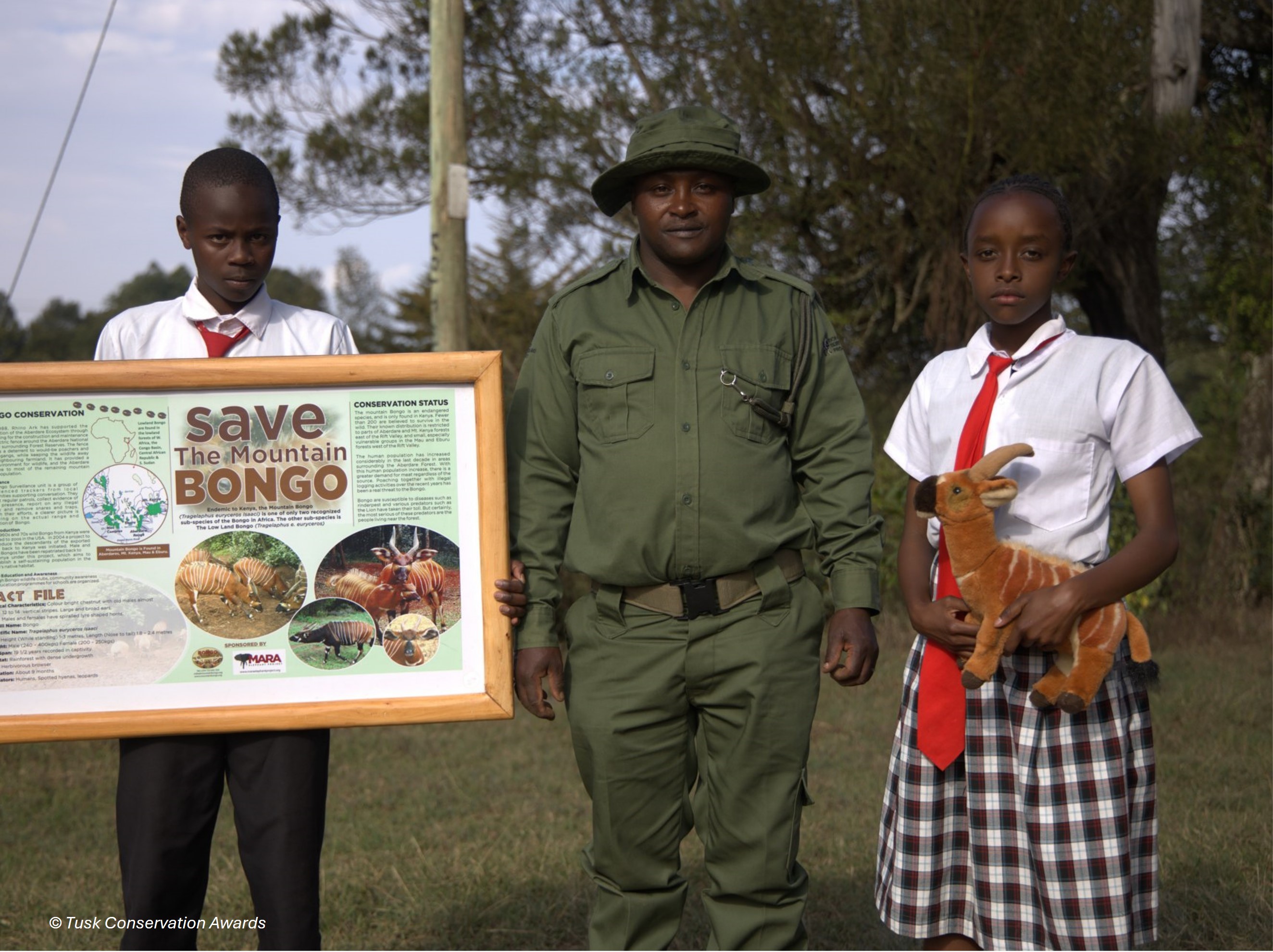
In November 2025, a quiet hero of conservation was brought into the spotlight when Laban Mwangi — head ranger of the Mountain Bongo Project (MBP) — received the Tusk Wildlife Ranger Award in London for two decades of dedication to protecting the Mountain bongo, one of Africa’s rarest antelope species. The mountain bongo is native only to Kenya’s misty high-altitude forests, such as the Aberdare and Mau complexes, and the Mount Kenya region, and is critically endangered. Estimates suggest fewer than 100 individuals remain in the wild today. Mwangi’s path hasn’t been easy. He joined the Mountain Bongo Project in 2005 as its first ranger and has since risen to become head ranger. Over the years, he has led relentless patrols through dense, dangerous forests: areas where even tracking signs of bongos require patience, stealth, and deep knowledge of the terrain. Since bongos are so elusive, direct sightings are rare. Instead, conservationists rely on indirect evidence: footprints, droppings, camera-trap photos, and audio-visual signs in remote salt-licks or water sources. Mwangi’s team has removed more than 2,000 snares, dismantled elephant-trap lines, and made hundreds of arrests related to poaching and illegal logging. Each snare removed, each patrol conducted, safeguards not only bongos, but entire forest ecosystems. What makes this award even more meaningful is that it recognizes not only Mwangi’s bravery but also the mountain bongo’s fragile existence. The subspecies Tragelaphus eurycerus isaaci has seen a dramatic decline over the decades due to habitat loss, deforestation, poaching, and disease risks. Efforts to protect the bongo extend beyond patrols. In 2025, Kenya welcomed 17 mountain bongos repatriated from the United States as part of a broader restoration strategy. These individuals descend from original Kenyan populations taken abroad in the 1960s and ’70s. Their return aims to boost genetic diversity and reinforce the species’ long-term viability. The challenges ahead remain enormous. Forest fragmentation has divided remaining wild populations into isolated pockets. With small and scattered groups, genetic bottlenecks, inbreeding, and difficulty finding mates threaten survival. That’s why ranger teams like MWangi’s are crucial not just for patrolling, but for building trust with local communities, raising awareness, and offering alternatives to poaching. According to the Mountain Bongo Project website, their work involves community engagement, habitat protection, and efforts to eventually expand and reconnect forest patches. Mwangi described the award as not just for him, but for every ranger, every patrol, and every effort to safeguard the last wild mountain bongos. “Our patrols walk long distances, often in hard conditions, to look after the last wild bongos,” he said. This story speaks to how much conservation depends on dedicated individuals working quietly in remote places. The mountain bongo, with its chestnut-red coat, brilliant white stripes, spiraled horns, and forest-ghost habits, is more than a rare animal: it is part of Kenya’s high-mountain forest heritage. Right now, the bongo is hanging by a thread. But if enough people, governments, NGOs, local communities, and global citizens rally behind efforts like those led by Mwangi and the Mountain Bongo Project, there’s a path forward. Rewilding, habitat protection, anti-poaching enforcement, and community livelihood alternatives are all essential steps toward recovery. Let’s amplify the mountain bongo’s plight. Celebrate frontline rangers. Support conservation initiatives. Because every snare removed, every patrol completed, every returned bongo, and every protected forest inch us closer to ensuring that future generations may still glimpse one of the rarest antelopes on Earth roaming free under African forest canopies.
Photos and Videos
Explore More
To read more about this species and 14,000 other species around the world come to our website, register and explore more courageous stories like this one.
Pick an Animal and Save It