Mexico’s Nun-led Alliance To Save The Achoque Salamander—Inside The Quiet Rescue At Lake Pátzcuaro
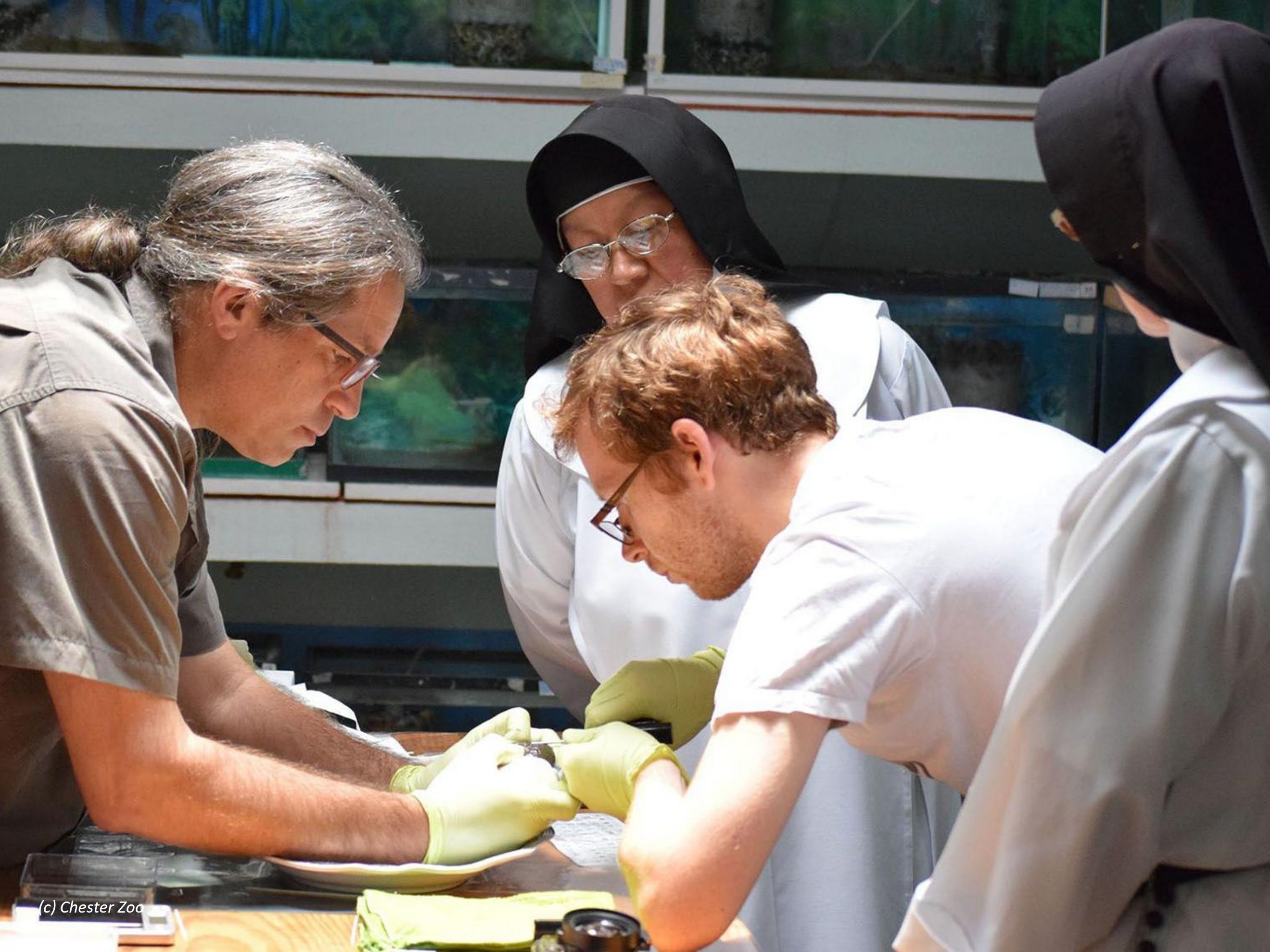
In a cool room behind a 16th-century basilica in Pátzcuaro, Michoacán, Dominican sisters move between rows of aquaria, checking temperature, testing water, and dropping earthworms to a colony of rare amphibians that look like smoke-brown, frill-gilled dragons. These are achoques—the Lake Pátzcuaro salamander (Ambystoma dumerilii)—and the nuns have become improbable guardians of one of the world’s most imperiled animals. Recent reporting and new research describe a growing, nun-scientist alliance that’s keeping the species alive while its lake home falters. The stakes are stark. Biologists estimate fewer than 150 achoques survive in the wild, all confined to Lake Pátzcuaro. Pollution (sewage, fertilizer), shoreline deforestation, invasive species and warming waters have shrunk and degraded the lake, turning a once-reliable refuge into a gauntlet. That’s why a stable, biosecure captive population now functions as a living ark. At the heart of that ark are the Dominican nuns at the Monasterio de la Virgen de la Salud (Basilica of Our Lady of Health). Led publicly by Sister Ofelia Morales Francisco, the sisters have cared for achoques for nearly two decades, mastering husbandry and breeding to establish the world’s largest captive colony—several hundred animals—inside the monastery. Their work began as an extension of traditional “jarabe de achoque” remedies but evolved into a formal conservation mission as wild numbers crashed. “Being part of a religious order…is not an obstacle for scientific progress,” Sister Ofelia has said. The newest chapter is a technology bridge between the cloister and the lab. In 2025, a team from Chester Zoo and Mexican partners refined a microchipping protocol to identify individual salamanders without harming them—crucial for tracking survival, genetics and any future releases. The monastery’s colony supplied animals for the study, and the chips stayed put with high success and no observed health effects, giving managers a reliable ID system for a species that rarely leaves the water and can live for decades. Reintroducing or even “head-starting” amphibians fails without granular monitoring. Microchips let field teams confirm who survives, who breeds, and how different lineages fare—exactly the feedback loop needed to turn a tank-raised population into conservation outcomes rather than just numbers on a spreadsheet. And because Lake Pátzcuaro’s problems are fixable but slow to fix, managers need time—and evidence—to plan careful, stepwise returns. This is also a coalition story. Alongside the sisters, researchers from Universidad Michoacana, government wildlife units, and international zoos contribute training, diagnostics, and genetics. Media accounts have helped push the achoque beyond “axolotl cousin” curiosity into a flagship for lake restoration—one where faith and science work shoulder-to-shoulder. What still stands between the achoque and a comeback • Water quality: Until sewage treatment and runoff control improve in the Pátzcuaro basin, any release must be small and strategic. Conservationists stress habitat fixes in tandem with captive management. • Genetic stewardship: A tiny wild population risks inbreeding; microchipped pedigrees help managers maintain diversity in captivity and, eventually, in the lake. • Disease biosecurity: Keeping the monastery colony close to the native habitat is an advantage—but only if strict protocols prevent pathogen transfer both ways. The alliance’s testing and quarantine routines are designed for that. How you can actually help (beyond sharing a cool story) 1. Back the on-the-ground alliance. Support the monastery’s conservation unit and Mexican academic partners working on husbandry, genetics and environmental education for Lake Pátzcuaro communities. 2. Fund habitat, not just husbandry. Local NGOs and agencies tackling sewage, reforestation and erosion in the watershed are directly tied to the salamander’s future. Achoques can’t go home to a sick lake. 3. Boost the monitoring science. The Chester Zoo–led microchip work needs scaling—more tags, more field readers, more trained hands—to turn captive wins into measured wild gains. The achoque is Mexico’s quieter amphibian icon—less famous than the axolotl, but just as extraordinary. Thanks to Sister Ofelia and an expanding circle of scientists, the species has breathing room—and a plan that blends care, chips, and clean water. If we sustain that mix, there’s a credible path from monastery tanks back to a recovering Lake Pátzcuaro, where the salamanders’ frilled gills belong.
Photos and Videos
Explore More
To read more about this species and 14,000 other species around the world come to our website, register and explore more courageous stories like this one.
Pick an Animal and Save It